Everyone’s obsessing over FLOPs. Benchmarks, leaderboards, token throughput. But here’s the dirty secret nobody in AI infrastructure wants to admit: the memory wall is the real bottleneck, and we’ve been pretending it doesn’t exist. While GPU suppliers print money selling GPUs with ever-fatter HBM stacks, a quiet revolution is happening in how we think about memory hierarchy—and it’s about to reshape the entire inference stack.
Category: Blogs Page 1 of 5
thoughtfully written
Two things the enterprise AI world hasn’t fully woken up to yet:
First — F500 enterprises setting up a dedicated GPU cluster with a custom-trained model for targeted use cases, running alongside frontier closed model like Claude Opus 4.6, is a business model the frontier labs haven’t fully explored. The labs still own the model and weights. The enterprise owns the security and data sovereignty layer. That’s a powerful, underexplored wedge.
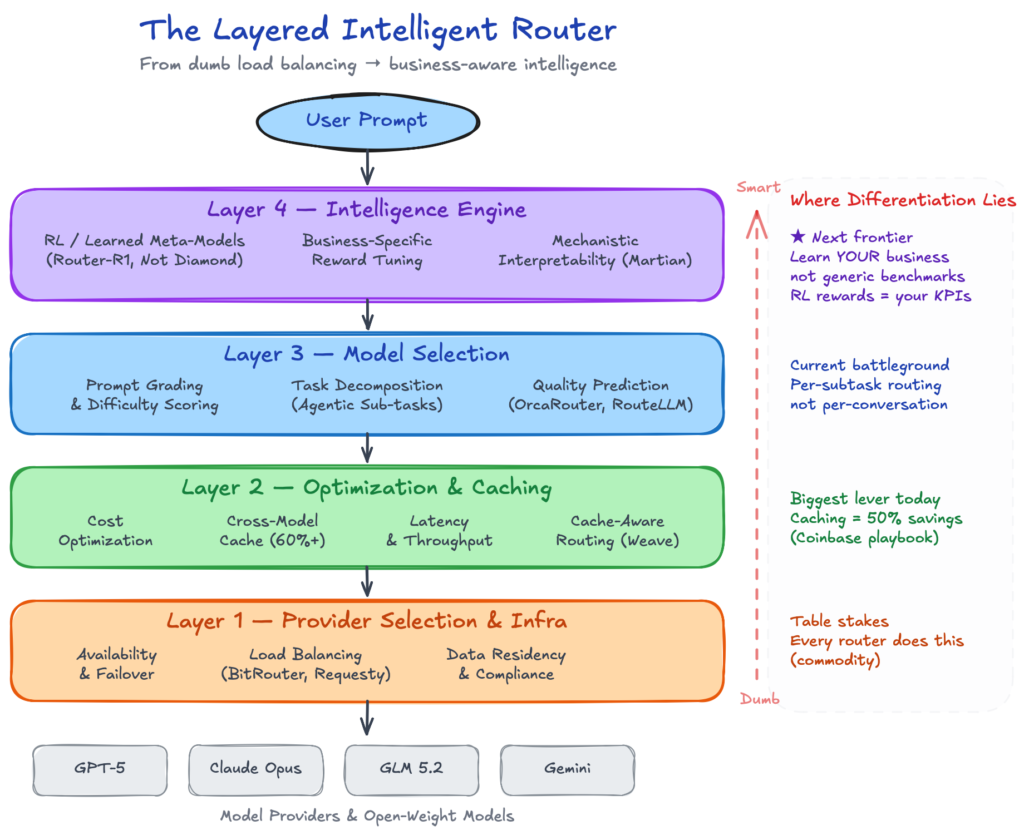
Second — most enterprises have an untapped ability to build an intelligent routing layer on top of multiple models hosted by leading cloud providers like Oracle. Think OpenRouter sitting on top of 4–5 models leased or licensed by the enterprise — a mix of closed and open source. This intelligent routing layer is the enterprise superpower that almost no one is building yet.
The smartest bet in AI right now isn’t the model. It’s the plumbing around it.
We spent 2025 arguing about which LLM was better. GPT-5 vs Claude vs Gemini. Benchmarks, leaderboards, Reddit fights. Underneath all that noise, engineers quietly stopped asking “which model?” and started asking “how do I run 20 of them without losing my mind?” That question is now an infrastructure category. Agent harnesses. And nobody has clean answers yet.
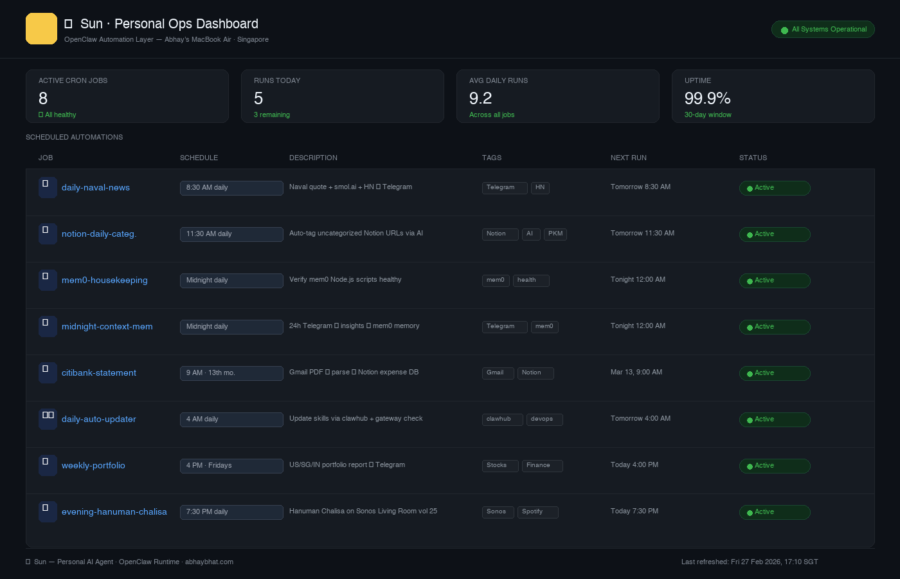
I’ve been running a personal AI agent named Sun on my personal MacBook for several weeks. It manages my morning news briefing, auto-categorises my Notion inbox, tracks my portfolio across four markets, and every evening at 7:30 PM — without fail — plays Hanuman Chalisa on the Sonos in my living room so my daughter Anaya grows up hearing it. This is what that actually looks like.
Building products that actually work requires engineers who live with customers, not Zoom warriors
The Bold Truth About Product Discovery
Forward Deployed Engineers (FDEs) are techies who embed directly with customers—not in Zoom calls, but in their offices, warehouses, or hospitals—to understand real problems and build solutions that actually work. This model, pioneered by Palantir and now spreading across AI startups, is becoming the secret weapon for creating products that deliver outcomes instead of features. If you’re building anything complex, especially AI agents, this might be the only way to win.
Why the future of AI isn’t one chip to rule them all
The 60-Second Primer
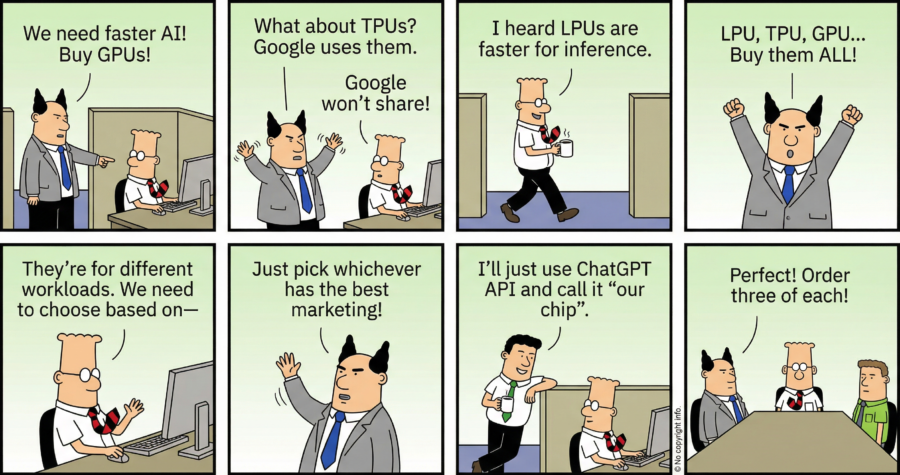
Three chips are fighting for AI’s soul. GPUs (Graphics Processing Units) — the Swiss Army knife that trains most AI models today. TPUs (Tensor Processing Units) — Google’s secret weapon, hoarded for its own data centers. And LPUs (Language Processing Units) — the new kid optimized purely for inference speed. Understanding which chip wins where isn’t just hardware trivia — it’s the difference between a startup burning cash on the wrong infrastructure and an enterprise shipping AI that actually responds in real-time.
The Future of Money: A Simple Guide to Blockchain, Stablecoins, and the New Financial Rails
What is the GENIUS Act and Why Does It Matter?
Imagine if the government created official rules for a new type of digital dollar that lives on the internet. That’s essentially what the GENIUS Act (Guiding and Establishing National Innovation for US Stablecoins) aims to do. Think of it as a “driver’s license system” for digital money.
The key requirements in the GENIUS Act legitimize stablecoins by ensuring they’re backed by real dollars held in safe places (like US Treasury bonds), similar to how old paper money used to be backed by gold. Companies issuing stablecoins must prove they have $1 in reserve for every $1 stablecoin they create, get regular audits (like health inspections for restaurants), and follow strict rules about who can use them (to prevent bad actors from misusing the system). This framework transforms stablecoins from experimental internet money into regulated financial instruments that banks, businesses, and everyday people can trust—essentially giving them a “seal of approval” that makes them usable for mainstream commerce.
The Spark That Ignited Everything
I still remember the day my world changed forever. I was fifteen, maybe sixteen, when my father walked through our front door carrying what seemed like a treasure chest – a brand new Windows 3.1 system. The beige tower hummed with promise, and I was absolutely starstruck. While other teenagers were out playing cricket or watching movies, I found myself drawn to this magical box like a moth to a flame.
Effective communication is crucial for success in today’s fast-paced business world. However, one of the most misunderstood aspects of workplace communication is the concept of escalation. Many people view it negatively, associating it with complaining or failure. Nevertheless, when used correctly, escalation can be a powerful tool for progress and problem-solving.